2026 Best Age for a Child to Start Using a Trampoline?

Time:2026-10-04 Author:Ethan
0%

Choosing the right time for trampoline use is not as simple as checking a child’s birthday. Physical development, coordination, judgment, and equipment design all matter. A confident three-year-old may still lack the balance needed to land safely. An older child may also take unnecessary risks when excited.

Parents often ask, “What is the safest age for a child to start using a trampoline?” In many pediatric safety recommendations and manufacturer guidelines, children under six should avoid full-size trampolines. Their bones, balance, and impulse control are still developing. Some supervised toddler rebounders may be designed differently, but they are not automatically risk-free. The product label, safety enclosure, spring protection, and weight limits deserve careful attention.

Age alone cannot guarantee safe play. A responsible adult should watch continuously, not from another room. One child at a time is safer than crowded jumping. Somersaults and rough games should wait until proper coaching is available. The mat should be dry, intact, and free from toys or loose clothing. Small details matter, such as checking whether the net has gaps near the frame.

This topic also deserves honest reflection. Even careful families cannot remove every injury risk. Trampolines can cause fractures, sprains, and head injuries when supervision fails. A cautious decision may mean waiting longer, choosing a safer alternative, or asking a pediatric professional for individual advice. The best starting age depends on readiness, equipment, supervision, and a child’s ability to follow clear rules consistently.
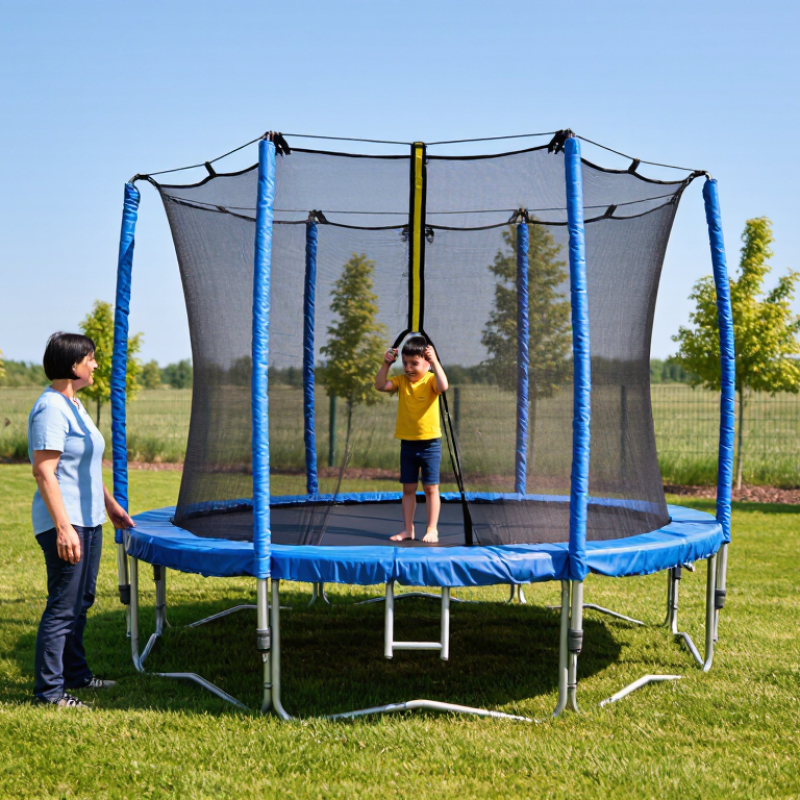
2026 Best Age for a Child to Start Using a Trampoline?

What Age Is Safest for a Child to Start Using a Trampoline?

The safest age for a child to start using a trampoline is generally six years or older.

The American Academy of Pediatrics advises that children under six should not use trampolines. Their bones, balance, and judgment are still developing. Age six is a useful safety threshold, not a magic guarantee.

The U.S. Consumer Product Safety Commission reports more than 100,000 trampoline-related emergency department injuries each year. Fractures, sprains, and head injuries remain common concerns.

A child may look confident while jumping, yet lose control within seconds. In my view, adult supervision must stay close, not across the yard. One jumper at a time also matters. Many injuries happen when children collide or land awkwardly.

Tips:
  • Choose a trampoline with enclosure netting, padding, and stable installation.
  • Check the frame, springs, and mat before every use.
  • Keep children away during rain or strong wind.
  • Do not allow flips without qualified instruction.
  • A caregiver should watch continuously, since even a short distraction can matter.
  • I would also reconsider trampoline use for children who cannot follow simple safety rules consistently.

Safety advice is never perfect, but ignoring small warning signs creates larger risks.

How Developmental Skills Affect Trampoline Readiness

For 2026, age six is a cautious starting point, not a guaranteed readiness date. The American Academy of Pediatrics reported nearly 100,000 trampoline-related injuries annually in the United States, based on emergency-department data from 2009. Its guidance advises against trampoline use for children younger than six. Age matters, but developmental skills matter more.

A ready child can balance briefly, bend both knees, and land without falling forward. They can follow one-step instructions, stop when asked, and wait for another child. Emotional control counts too. Excitement can override careful movement. I have seen children understand the rules, then forget them after one exciting bounce.

Look for steady walking, climbing, and jumping on firm ground first. Ask the child to jump, freeze, and step away on request. Can they do it repeatedly? That answer may reveal more than their birthday. A 2023 U.S. Consumer Product Safety Commission report also recorded millions of playground-related injuries, showing why supervision and skill development remain essential. Trampoline readiness is not a pass-or-fail label. Some six-year-olds need more time, while an older child may still act impulsively. Use one jumper only, maintain close adult supervision, and stop when fatigue changes the child’s landing or attention.

2026 Best Age for a Child to Start Using a Trampoline?

How Developmental Skills Affect Trampoline Readiness

This chart counts cumulative developmental milestone examples that are relevant to trampoline readiness: jumping with both feet, catching a large ball, hopping on one foot, and following rules or taking turns. These milestones are developmental indicators, not a medical clearance or a guarantee of safe trampoline use.

Age alone is not enough. The American Academy of Pediatrics advises that children younger than 6 should not use trampolines. For children aged 6 and older, use should still involve continuous adult supervision, one child at a time, protective netting, and equipment that is regularly inspected.

Developmental milestone references: CDC developmental milestones for ages 2–5. Safety age guidance: American Academy of Pediatrics trampoline safety guidance.

Safety Rules for Toddlers, Preschoolers, and Older Children

2026 Best Age for a Child to Start Using a Trampoline?

For most children, age six is a safer starting point for trampoline use. Many pediatric safety experts advise keeping children under six off trampolines because their balance and bones are still developing. Toddlers should use the floor, not a trampoline. Offer soft-play climbing, jumping games, or supervised outdoor movement instead. A small rebounder is not automatically safer.

Preschoolers may beg to join older siblings. Keep them away from the jumping surface, even when an adult stands nearby. Not even briefly. At home, close the entrance and remove access ladders after use. For children six and older, an alert adult should watch every session. One jumper only. No flips, wrestling, pushing, or jumping while carrying toys. Shoes, food, and loose clothing can create avoidable problems. Check the frame, springs, padding, enclosure, and ground clearance before each use.

Place the trampoline on level ground, away from trees, fences, pools, and hard surfaces. Follow the equipment instructions and local safety guidance, since designs and rules differ. A safety net helps, but it cannot prevent every injury. I would rather disappoint a determined four-year-old than rush the decision. Even careful supervision can miss one quick step. Recheck the rules as children grow, because confidence often develops faster than judgment.

Choosing the Right Trampoline and Protective Features

Choosing the right trampoline matters as much as choosing the right starting age. Many pediatric safety recommendations suggest waiting until at least age six, because younger children may lack balance and body control. A child’s maturity also matters. Some six-year-olds need more time. Ask a pediatric professional if coordination or medical concerns exist.

Select a trampoline with a strong, rust-resistant frame and tightly fitted springs. Thick, secure padding should cover the frame and springs completely. A flexible safety enclosure needs a reliable zipper or locking entrance. The net should attach inside the jumping area, not outside the frame. Choose a model that matches the child’s weight and available space. It should stand on level ground and remain away from walls, trees, and hard surfaces.

Protective features cannot replace active supervision. One child should jump at a time, even when the trampoline seems spacious. Remove shoes, toys, and loose clothing before use. An adult should check the net, padding, frame, and anchor points before each session. Small tears can become serious quickly. No setup is perfect. I once underestimated how easily wet grass could make equipment shift. Weather changes, so inspections need repeating. Stop use during rain, strong wind, or damaged conditions. Children also need simple rules: no flips, no pushing, and no climbing onto the enclosure.

Supervision and Safe Jumping Habits by Age Group

2026 Best Age for a Child to Start Using a Trampoline?

Supervision and Safe Jumping Habits by Age Group

There is no single perfect starting age. Many pediatric safety experts advise avoiding trampoline jumping for children under six. Balance, judgment, and body control are still developing. Check the equipment’s age guidance and discuss individual concerns with a healthcare professional.

Under six, choose safer movement games instead. If a young child is near a trampoline, an adult should remain within arm’s reach. Older children need direct supervision too. One jumper at a time. No flips, wrestling, pushing, or chasing. Keep the surface dry and clear of toys. A responsible adult should watch, not simply listen from indoors.

From six to eight, teach controlled two-foot jumps, soft knees, and stopping on command. Keep sessions short. Children aged nine and above may manage more independence, but supervision should match maturity, not birthdays. Follow the equipment instructions carefully. Inspect springs, padding, netting, and the frame before every use. I once thought confidence meant readiness. It does not. A child who jumps high may still ignore rules when excited. Adults must keep checking.

2026 Best Age for a Child to Start Using a Trampoline? - Supervision and Safe Jumping Habits by Age Group

Safety guidance is based on widely used pediatric and injury-prevention recommendations. Local regulations and a child’s individual development should also be considered.
Age group Recommended status Required supervision Safe jumping habits Equipment and environment checks Stop-use warning signs
Under 6 years Do not use a trampoline.
Young children have a higher risk of serious injury because of developing balance, coordination, and body control.
Adult supervision cannot make trampoline use safe for this age group; prevent access when the trampoline is not in use. Use age-appropriate floor activities instead. Do not allow climbing, playing, or standing on the trampoline. Keep the access ladder or other entry aid secured and use a locked safety enclosure where available. Any attempt to enter the trampoline area should be treated as a safety concern.
6–8 years Only with strict controls.
Readiness depends on balance, ability to follow instructions, and consistent impulse control.
One sober, attentive adult should supervise continuously from close by, not from another room or while using a phone. One jumper at a time; use gentle, centered two-foot jumps; keep knees slightly bent; no pushing, chasing, flips, somersaults, wrestling, or jumping off. Use a level surface, intact frame padding, a properly fitted enclosure, and clear space around the trampoline. Keep away from trees, fences, and hard surfaces. Stop immediately for unsafe behavior, fatigue, dizziness, pain, damaged padding, a loose net, or wet/slippery conditions.
9–12 years Permitted only under active supervision.
Older children may follow rules more reliably, but collision and landing injuries remain possible.
An adult should remain present, maintain visual attention, and enforce the one-jumper rule throughout the session. Stay in the center; use controlled jumps; avoid height competitions, double bouncing, intentional net contact, and all aerial maneuvers unless trained in an appropriate supervised program. Inspect before use for torn fabric, stretched springs, exposed metal, missing padding, loose fasteners, or enclosure damage. End the session when concentration drops, weather changes, the child lands awkwardly, or another child attempts to enter.
13–17 years Use caution and maintain supervision.
Age alone does not remove the risk of fractures, sprains, head injuries, or collisions.
A responsible adult should be available and able to intervene; organized training should use a qualified coach and appropriate safety equipment. Jump alone, follow established routines, avoid alcohol or impairment, do not attempt unfamiliar tricks, and never land on the head or neck. Check the structure, mat, springs, enclosure, anchor points, and surrounding clearance. Do not use during rain, wind, or icy conditions. Stop for pain, numbness, weakness, headache, confusion, neck or back pain, or any fall involving the head.
18 years and older Use informed judgment.
Adults should consider fitness, prior injuries, balance, pregnancy, and medical advice before using a trampoline.
Supervision is still advisable for complex skills, first-time use, or anyone with a relevant health condition. Use controlled movements, one jumper at a time, and suitable footwear or bare feet as recommended by the equipment instructions. Avoid risky flips and collisions. Follow the manufacturer’s weight and user limits, maintain the enclosure and padding, and keep the area free from obstacles. Stop after any injury, loss of balance, chest pain, shortness of breath, severe headache, or suspected concussion.
Universal safety rules for every permitted age: one jumper at a time; continuous adult supervision for children; no flips, somersaults, rough play, or intentional net contact; use a safety enclosure and protective frame padding; inspect the trampoline before every use; keep the surface dry; and seek medical evaluation after a significant fall or head, neck, or back impact.

FAQS

What is a suitable starting age for trampoline use?

Many pediatric safety recommendations suggest waiting until at least age six. Some children need longer.

Why may younger children face greater risks?

Balance, judgment, and body control are still developing. A small child may struggle to stop safely.

What equipment features should parents check?

Choose a rust-resistant frame, tight springs, and thick padding covering the frame completely.

Where should the safety net attach?

The net should attach inside the jumping area. It should include a secure zipper or locking entrance.

How should the trampoline be positioned?

Place it on level ground, away from walls, trees, and hard surfaces. Anchor points also need regular checking.

What rules should children follow while jumping?

Only one child should jump at a time. No flips, pushing, wrestling, chasing, or climbing the enclosure.

How should adults supervise trampoline use?

An adult should watch directly, not listen from indoors. Stay close to younger children and observe every session.

What checks are needed before each session?

Inspect the net, padding, frame, springs, and anchors. Small tears can worsen quickly.

Should children jump during wet or windy weather?

No. Stop use during rain, strong wind, or damaged conditions. Wet grass can make equipment shift.

How can jumping habits change with age?

Children six to eight should practice short, controlled two-foot jumps. Older children may gain independence, but maturity matters more than birthdays.

Conclusion

What is the safest age for a child to start using a trampoline? In general, children should wait until they are developmentally ready to follow instructions, control their movements, and maintain balance. Toddlers and very young preschoolers may lack the coordination and judgment needed for safe jumping, while older children are usually better prepared when closely supervised. Readiness should be based on individual skills rather than age alone.

Safe trampoline use requires age-appropriate rules, including one jumper at a time, no rough play, and stopping when a child becomes tired. Young children need constant, hands-on supervision, while older children still require clear boundaries and regular checks. Families should choose a trampoline with strong construction, a protective enclosure, secure padding, and a stable setup. Before jumping, children should learn safe landing habits, avoid flips unless professionally instructed, and use the equipment only in suitable weather and surroundings.

Ethan

Ethan

Ethan is a seasoned marketing professional with a deep expertise in our company's innovative product line. With a passion for sharing knowledge and insights, he takes the lead in regularly updating our corporate blog, where he explores industry trends, product features, and effective marketing......